Published
- 5 min read
Ultimate Trampoline Maintenance Guide: Double Your Mat's Lifespan
The Ultimate Trampoline Maintenance Guide: How to Double the Lifespan of Your Mat and Springs
A high-quality backyard trampoline is a significant financial investment, often costing over $1,000. Yet, I am constantly amazed by how many homeowners treat them as disposable toys, leaving them completely unprotected against brutal summer suns and crushing winter snows.
Without proper maintenance, even the best commercial-grade trampoline will begin to fail. The UV rays will turn the safety pads to brittle dust, the springs will rust and lose their tension, and the jumping mat will stretch and weaken. The average lifespan of an ignored trampoline is just 3 to 4 years. However, with a dedicated, professional maintenance routine, you can easily double—or even triple—that lifespan.
In this expert guide, I will share the definitive maintenance schedule for your backyard trampoline, covering rust prevention, mat cleaning, and proper winterization techniques, featuring the best preservation tools available on Amazon.
1. Spring and Frame Care: Winning the War on Rust
The steel frame and the tension springs are the structural heart of your trampoline. If they fail, the entire system collapses.
The Lubrication Secret
Metal rubbing against metal creates friction, which wears away the protective galvanized coating and invites rust. Every time a spring squeaks, it is wearing down.
- The Fix: Once a season (Spring and Fall), you must lubricate the connection points. Do not use WD-40, as it can attract dirt. Use a heavy-duty, weather-resistant silicone spray or white lithium grease.
- The Technique: Spray the hook of every spring where it attaches to the frame and the mat V-ring. This prevents squeaking and seals the metal against moisture.
- Affiliate Pick: Heavy Duty Silicone Spray Lubricant
Inspecting for Frame Fatigue
Walk around the perimeter and check the welds on the leg joints. If you see deep, flaking rust (not just surface discoloration), the structural integrity is compromised. Light surface rust can be scrubbed away with a wire brush and sealed with a rust-converting spray paint.
2. Mat and Safety Pad Care: Defeating UV Damage
The jumping mat and the foam safety pads take the brunt of the sun’s punishing ultraviolet rays. Photo-degradation makes the plastic brittle, leading to sudden tears.
Cleaning the Mat
Dirt, bird droppings, and fallen leaves act as abrasives. When kids jump on a dirty mat, the grit grinds into the woven polypropylene, weakening the fibers.
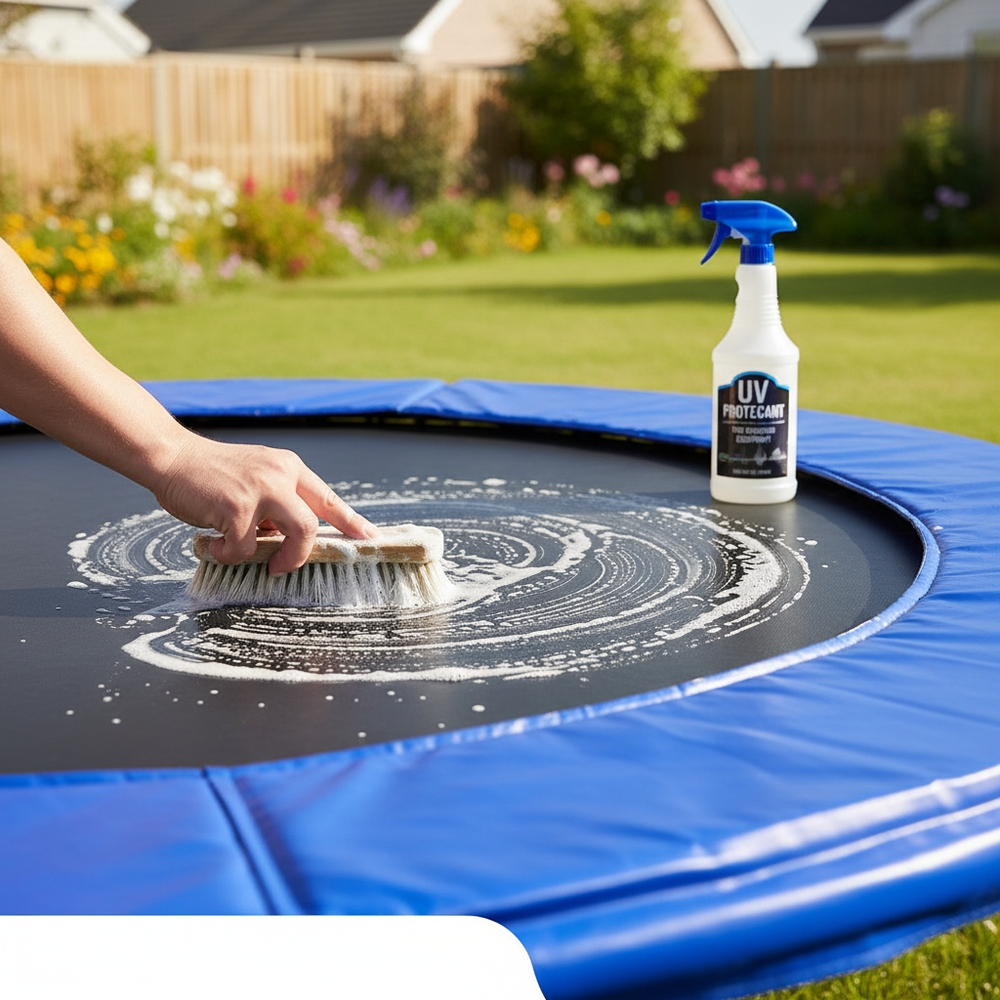
- The Routine: Sweep the mat weekly. Once a month, wash the mat using a soft-bristle brush, lukewarm water, and a mild, non-abrasive dish soap. Rinse thoroughly with a hose and let it air dry completely. Never use bleach or harsh chemicals, as they will destroy the UV coating.
Protecting the Safety Pads
The safety pads are usually the first thing to disintegrate.
- The Fix: Treat the vinyl or PVC cover of the safety pad with a marine-grade UV protectant spray twice a summer. This acts as sunscreen, keeping the material supple and preventing cracks.
- Affiliate Pick: 303 Marine Aerospace Protectant Spray
3. Winterizing: To Disassemble or Not?
If you live in a region that experiences heavy snowfall or deep freezes, winter is the true test of your trampoline.
The Danger of Snow Load: A standard trampoline mat is designed to handle dynamic weight (jumping), not static weight. If a foot of heavy, wet snow sits on the mat for weeks, the springs will stretch beyond their elastic limit and permanently lose their bounce.
Option A: The Full Winterization (Recommended for Harsh Climates)
If you expect heavy snow, do not leave the mat attached.
- Remove the safety net and store it indoors to prevent ice damage.
- Remove all springs and the jumping mat. Store them in a dry, rodent-proof bin.
- Leave the heavy steel frame outside (it is fine in the snow).
Option B: The Cover Method (For Mild Climates)
If you only get light, occasional snow, you can leave the trampoline assembled, but you must protect it.
- Purchase a heavy-duty weather cover with a center drainage hole.
- If snow accumulates, use a soft-bristle push broom to sweep it off immediately. Never use a metal shovel, as you will slice the mat.
- Affiliate Pick: All-Weather Trampoline Cover with Drainage Hole
Conclusion
Treat your trampoline like a vehicle. You wouldn’t drive a car for 5 years without changing the oil, and you shouldn’t let your trampoline sit in the elements without regular maintenance. By lubricating the springs, applying UV protectant to the pads, and protecting the mat from heavy snow loads, you ensure a safe, high-bouncing experience for your family for over a decade.