Published
- 6 min read
Why Springless Trampolines Are the Future of Backyard Safety
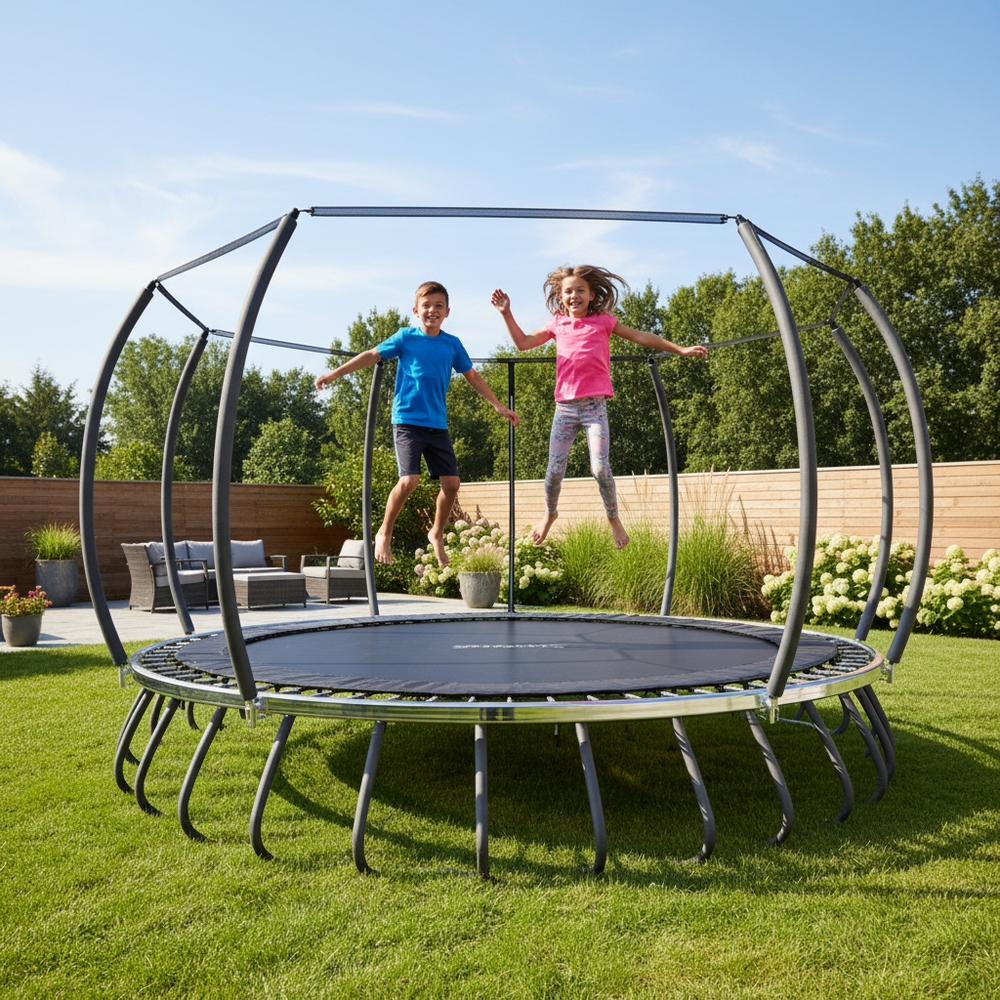
Why Springless is the Future of Backyard Safety: A Deep Dive into Trampoline Innovation
As a certified backyard safety expert and trampoline enthusiast, I’ve seen the evolution of recreational bouncing firsthand. For decades, the traditional backyard trampoline consisted of a steel frame, a canvas mat, and dozens of high-tension metal springs. While undeniably fun, this classic design has historically been a significant source of emergency room visits. Pinched fingers, pinched toes, and the dreaded “spring-slip” (where a jumper lands between the springs and the frame) were considered an accepted risk of backyard play.
However, in 2026, the landscape of backyard safety has fundamentally shifted. The industry is rapidly moving away from traditional metal springs in favor of “Springless” technology.
But is springless technology just an expensive marketing gimmick, or does it actually provide a measurable increase in safety? In this deep dive, I will break down the engineering behind springless trampolines, explain why they are rapidly becoming the gold standard for parents, and recommend the top models available on Amazon today.
1. The Anatomy of a Trampoline Injury
To understand why springless is better, we must first look at how traditional trampolines fail. According to safety data, the vast majority of trampoline injuries do not occur from falling off the trampoline entirely (thanks to the widespread adoption of enclosure nets). Instead, injuries happen on the trampoline surface.
- The “Impact Zone”: On a traditional trampoline, the outer 15% of the jumping surface is comprised of steel springs and the rigid steel frame. Even with a thick safety pad, landing on this perimeter is like landing on a concrete curb covered by a thin mattress.
- Pinch Points: Metal springs expand and violently contract. Small toes and fingers can easily get caught in the coils during a chaotic bounce session.
- Pad Deterioration: The safety pads that cover metal springs degrade quickly under UV sunlight. Once the pad rips or shifts, the dangerous metal perimeter is completely exposed.
2. How “Springless” Technology Works
Springless trampolines remove the metal coils entirely. Instead, they rely on alternative physics to generate the bounce.
The Composite Rod System
Pioneered by brands like Springfree, this system uses flexible, high-tensile composite rods (similar to the material used in deep-sea fishing rods).
- The Mechanics: These rods sit beneath the jumping mat, angling outward to the frame. When you jump, the rods bend down and inward, storing kinetic energy, and then snap back into position to propel you upward.
- The Safety Advantage: Because the rods are located entirely beneath the jumping surface, there is no “impact zone” on the perimeter. The entire mat is a safe landing area. You cannot hit the frame, and there are no coils to pinch fingers.
The Bungee/Elastic Band System
Often used in fitness rebounders or smaller outdoor models, this system replaces metal springs with heavy-duty bungee cords.
- The Mechanics: Thick elastic loops connect the mat to the frame.
- The Safety Advantage: While the frame is still on the same plane as the mat, the bungees are soft. Landing on an elastic band will not cause the severe bruising or fractures associated with steel coils.
3. The Performance Difference: How Does it Bounce?
A common myth is that springless trampolines don’t provide a good bounce. This is entirely false.
- The “Smooth” Bounce: Traditional metal springs provide a jarring, sudden stop at the bottom of a bounce. Composite rods provide a much smoother, deeper deceleration. This is significantly better for a jumper’s joints, reducing knee and lower back impact.
- The “Edge” Bounce: On a traditional trampoline, the bounce dies completely if you jump near the edge. On a premium springless model, the composite rods provide a consistent, even bounce across 100% of the mat surface.
4. Top Rated Springless Trampolines on Amazon
If you are ready to invest in the future of backyard safety, here are the top-rated springless options currently dominating the market.
1. The Gold Standard: Springfree Trampoline (Jumbo Square)
Springfree is the inventor of the composite rod system and remains the undisputed king of safety.
- Why we love it: The frame is located entirely beneath the jumping surface. The enclosure net uses flexible composite rods instead of rigid steel poles, meaning if a child crashes into the net, there is zero risk of hitting a hard pole. It has a massive 1500lb structural capacity.
- The Verdict: The safest trampoline in the world. Expensive, but worth every penny for peace of mind.
- Get it on Amazon: Springfree Jumbo Square Trampoline
2. The Bungee Alternative: Zupapa Springless Fitness/Kids Trampoline
For younger children or smaller backyards, a heavy-duty bungee system offers excellent safety at a lower price point.
- Why we love it: Zupapa utilizes thick, durable bungee cords that provide a quiet, soft bounce. The enclosure net is sewn directly into the jumping mat, completely sealing off the bungee perimeter from little feet.
- The Verdict: An excellent, silent, and safe option for toddlers and elementary-aged kids.
- Get it on Amazon: Zupapa Springless Bungee Trampoline
5. Is Springless Worth the Investment?
Springless trampolines are undeniably more expensive than traditional spring models. A standard 14ft spring trampoline might cost $400, while a similar-sized springless model can exceed $1,500.
So, is it worth it? As a safety expert, I argue that the cost of an emergency room visit for a fractured ankle or a severe laceration far exceeds the price difference. Furthermore, high-end springless models use UV-resistant mats and double-powder-coated frames that easily last 10+ years, whereas a cheap spring trampoline usually rusts out and requires replacement pads within 3 years.
Conclusion
The shift toward springless technology is the most significant leap forward in backyard safety since the invention of the enclosure net. By removing the metal impact zone and utilizing smooth, joint-friendly composite rods, springless trampolines have transformed a risky backyard toy into a safe, reliable fitness tool for the whole family. If you are in the market for a new trampoline in 2026, springless isn’t just an option—it is the definitive future.