Published
- 4 min read
The Truth About Trampoline Nets: How to Inspect and Replace Them
The Truth About Trampoline Nets: How to Inspect and Replace Them
When you purchase a new backyard trampoline, the safety enclosure net looks indestructible. It’s taut, black, and seemingly ready to catch any flying child who bounces a little too close to the edge. However, as a safety inspector, I can tell you that the enclosure net is the fastest-degrading component of any trampoline.
A net that looks perfectly fine from a distance might actually be dangerously compromised. The combination of intense ultraviolet (UV) radiation from the sun, freezing winter temperatures, and the physical force of kids repeatedly crashing into it causes the polymer fibers to break down. A compromised net will tear like tissue paper the moment a jumper hits it, leading to a catastrophic fall.
In this guide, I will teach you the professional methods for inspecting your trampoline net, how to extend its lifespan, and how to choose the highest-quality replacement net on Amazon when it’s time for an upgrade.
1. The 3-Point Safety Inspection
You should inspect your trampoline net at the beginning of every spring season, and once a month during heavy summer use.
The “Pinch and Pull” Test (UV Damage)
UV damage is invisible until it’s too late. The sun literally bakes the moisture and flexibility out of the polyethylene or polyester fibers.
- How to test: Go to the south-facing side of your trampoline (the side that gets the most sun). Pinch a section of the netting between your thumb and forefinger. Pull sharply.
- The Result: If the net flexes and holds, it’s safe. If the fibers snap, crackle, or tear easily, the net is “dry-rotted” and must be replaced immediately.
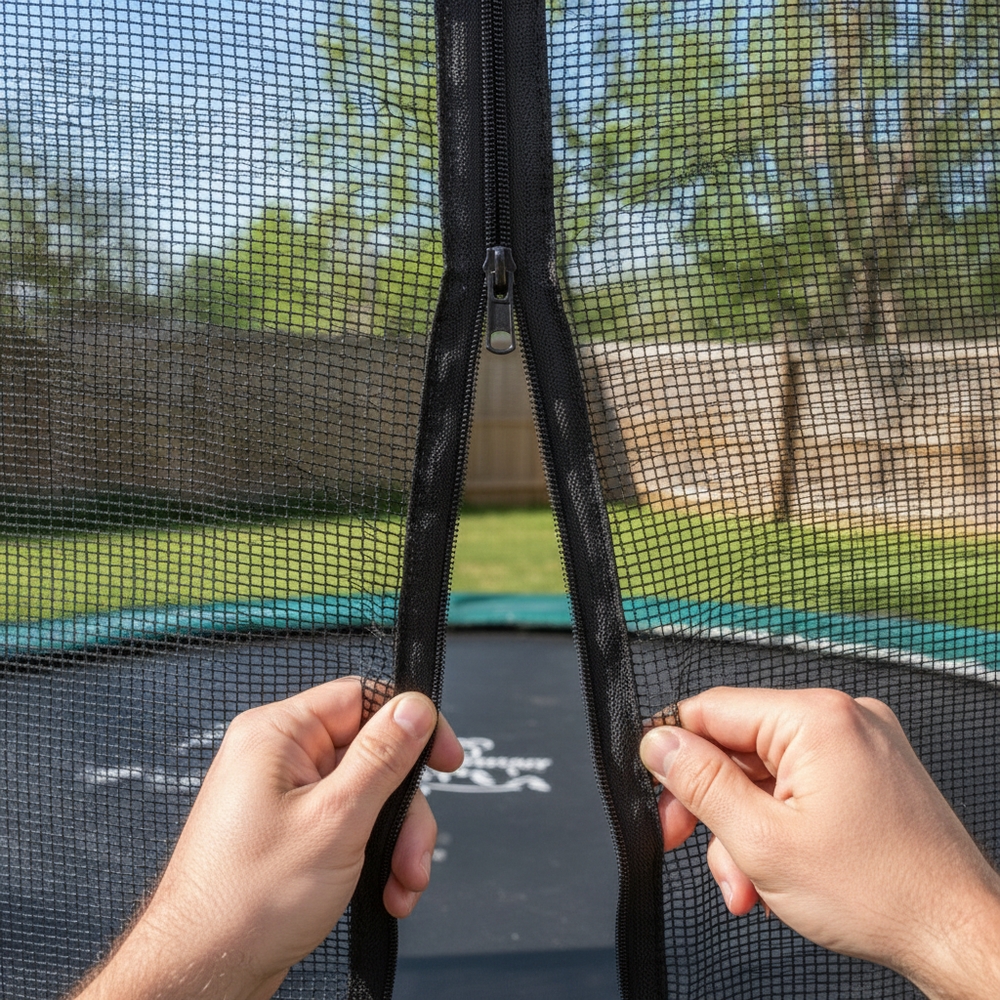
The Zipper and Clip Check (Entry Failure)
The entrance is the weakest point of any enclosure.
- How to test: Inspect the stitching around the zipper. Is it pulling away from the net? Are there missing teeth on the zipper track?
- The Danger: If a zipper bursts open while a child is leaning against the net near the entrance, they will fall straight through.
The Pole Sleeve Inspection (Structural Failure)
The sleeves that slide over the metal enclosure poles hold the net upright.
- How to test: Check the top of the sleeves. Does the metal pole poke through the fabric? If the top of the sleeve has worn away, the net will slide down the pole upon impact, rendering it useless.
2. Extending the Lifespan of Your Net
A standard big-box store net lasts 1-2 years. A premium net lasts 3-5 years. You can maximize this lifespan with two simple tricks:
- UV Protectant Spray: At the start of the summer, spray the entire net with a marine-grade UV protectant (like 303 Aerospace Protectant). This acts as sunscreen for the polymers.
- The Winter Takedown: The easiest way to double your net’s life is to remove it in the winter. Cold temperatures make the plastic brittle, and the weight of ice and snow stretches the fibers. Taking the net down takes 15 minutes and saves you $100+ in replacement costs.
3. Buying a Replacement Net on Amazon
When your net fails the “Pinch and Pull” test, do not let anyone jump on the trampoline until it is replaced. When buying a replacement on Amazon, you cannot just guess the size.
How to Measure Properly:
- Measure the Frame, Not the Mat: Measure the diameter of the outer steel frame from edge to edge straight across the middle.
- Count the Poles: Count how many enclosure poles your trampoline has (usually 6, 8, or 12).
- Check the Pole Shape: Are your poles straight, curved at the top, or arched? The replacement net’s sleeves must match this geometry.
Top Rated Replacement Nets
If you are upgrading, look for High-Density PE (Polyethylene) nets with reinforced stitching.
- Best Universal Fit (Straight Poles): SkyBound Premium Trampoline Replacement Net. Known for heavy-duty zippers and double-stitched sleeves.
- Best for Curved Poles: Machrus Upper Bounce Trampoline Net. Excellent UV resistance and highly adjustable straps.
Conclusion
Your trampoline’s enclosure net is not a permanent fixture; it is a wearable part, much like the tires on your car. By performing a monthly 3-point inspection, applying UV protection, and winterizing the fabric, you can keep your family safe. When the fibers finally give out, don’t hesitate—head to Amazon, measure your frame accurately, and invest in a high-density replacement net. A safe bounce is the best bounce.