Published
- 5 min read
The Rebounder vs. The Kid's Trampoline: What's the Difference?
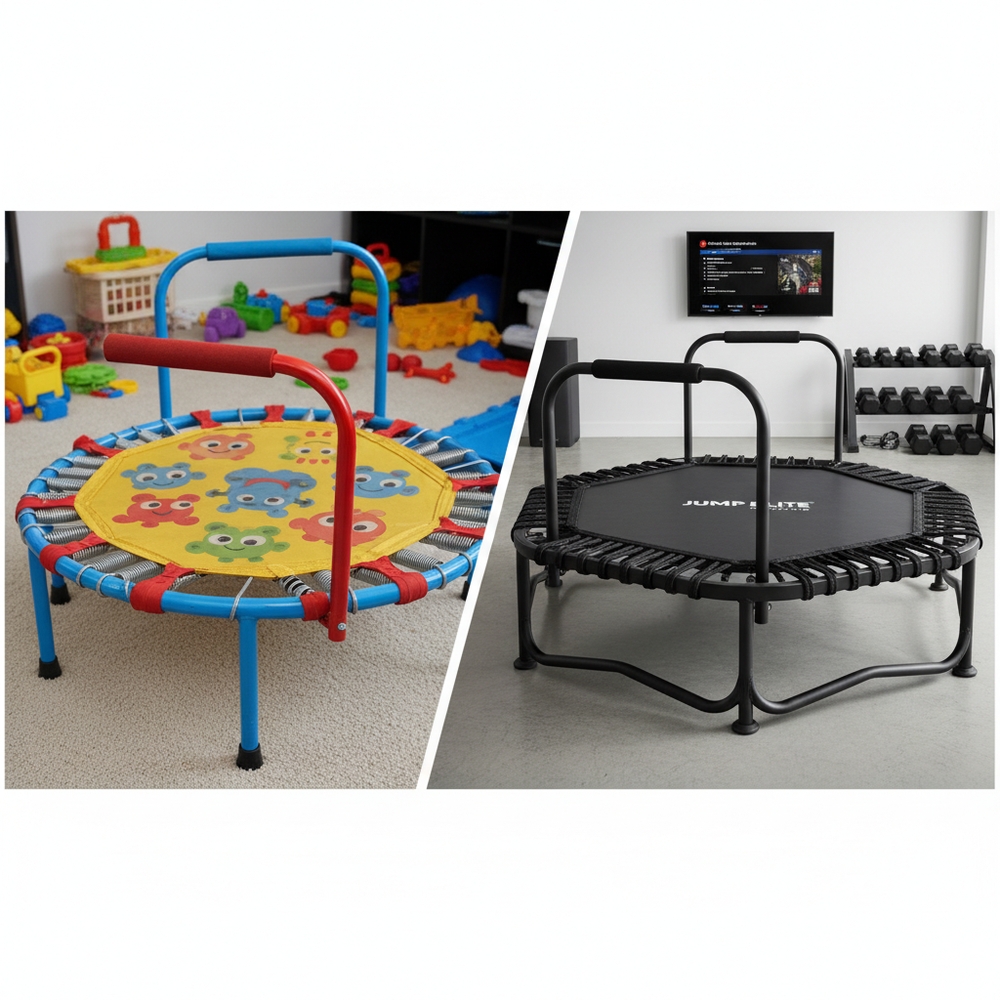
The Rebounder vs. The Kid’s Trampoline: What’s the Difference?
The scenario plays out in living rooms across the world: an adult discovers the immense cardiovascular and lymphatic benefits of “rebounding” (mini-trampoline fitness). However, rather than spending $250 on a professional fitness rebounder, they go to a big-box store and buy a $40 mini trampoline marketed for toddlers. Three weeks later, their knees ache, their lower back is in spasms, and the trampoline is banished to the garage.
The assumption that “a mini trampoline is a mini trampoline” is a dangerous misconception. As a fitness equipment specialist, I am constantly explaining that a professional rebounder and a children’s toy are two fundamentally different pieces of engineering.
If you are an adult attempting to use a trampoline for fitness, using the wrong equipment will do more harm than good. In this guide, I will break down the exact differences between a cheap kid’s bouncer and a high-end adult rebounder, and explain why upgrading your gear is mandatory for your joint health.
1. The Suspension System: Springs vs. Bungees
This is the most critical difference and the primary cause of injury for adults using cheap equipment.
The Kid’s Toy: Short, Stiff Steel Springs
A $40 trampoline is built with incredibly short, stiff metal springs (often only 2 inches long). Because a toddler only weighs 30 lbs, these springs don’t need to stretch very far.
- The Danger for Adults: When a 150lb adult jumps on these springs, they instantly “bottom out.” The springs reach their maximum stretch in a split second, bringing the mat to a violent, jarring halt. This sends the entire shockwave of the landing straight up your shins and into your knees. It is no better than jumping on concrete.
The Pro Rebounder: Custom Elastic Bungees
High-end fitness rebounders use thick, adjustable bungee cords instead of metal springs.
- The Benefit for Adults: Bungees provide a much longer, smoother deceleration phase. When you land, the bungee absorbs 85% of the impact, gently slowing you down before propelling you back up. This is why rebounding is famously “zero-impact” and safe for individuals with arthritis or knee replacements.
- Affiliate Pick: JumpSport 250 Fitness Trampoline (Bungee System)
2. The Mat Material and Tension
A jumping mat is not just a piece of fabric; it is a tuned surface.
The Kid’s Toy: Loose Canvas
Cheap trampolines use a loose, abrasive canvas or basic nylon. Because it isn’t designed for high-tension fitness, the mat sags quickly in the middle. When an adult jumps on it, their ankles “roll” inward toward the sag, leading to sprains and Achilles tendonitis.
The Pro Rebounder: High-Density Permatron
Professional rebounders use a proprietary material (often called Permatron). It is woven incredibly tight to prevent stretching.
- The Benefit: The mat remains perfectly flat and taut, even under the weight of an adult performing high-intensity interval training (HIIT). This provides a stable, predictable surface that protects the ankles and supports proper posture during the bounce.
3. Structural Stability and The “Edge” Problem
Fitness rebounding involves dynamic movement: high knees, jumping jacks, and side-to-side ski jumps.
The Kid’s Toy: Straight, Narrow Legs
Toy trampolines usually have straight, screw-in legs placed directly under the frame. If an adult lands near the edge of the mat, the center of gravity shifts outside the footprint of the legs, and the entire trampoline will flip over instantly.
The Pro Rebounder: Arched, Wide-Stance Legs
Look at the legs of a premium brand like JumpSport or Bellicon.
- The Design: The legs are arched outward, creating a base that is significantly wider than the jumping mat itself.
- The Benefit: This wide stance makes it virtually impossible to tip the rebounder over, even if you land a heavy, off-center jump during an intense cardio session.
- Affiliate Pick: BCAN 40” Foldable Mini Trampoline (Wide Base)
4. The Weight Capacity Reality
A kid’s trampoline might list a weight limit of 150 lbs. However, that is the static weight limit (standing still). As discussed in our other guides, a 150lb adult jumping exerts a dynamic load of over 300 lbs. You will destroy a toy trampoline in weeks. Professional rebounders are engineered with commercial-grade tubular steel to withstand dynamic adult loads of 250 to 300 lbs for years of daily use.
Conclusion
If you want the incredible cardiovascular and lymphatic benefits of rebounding, you must invest in the proper tool for the job. A cheap child’s trampoline will jar your joints, ruin your posture, and potentially cause a serious fall. By upgrading to a professional bungee-cord rebounder from Amazon, you protect your body and ensure that your fitness journey is smooth, silent, and highly effective.