Published
- 5 min read
The Best Trampolines for Parkour and Freerunning Practice
The Best Trampolines for Parkour and Freerunning Practice
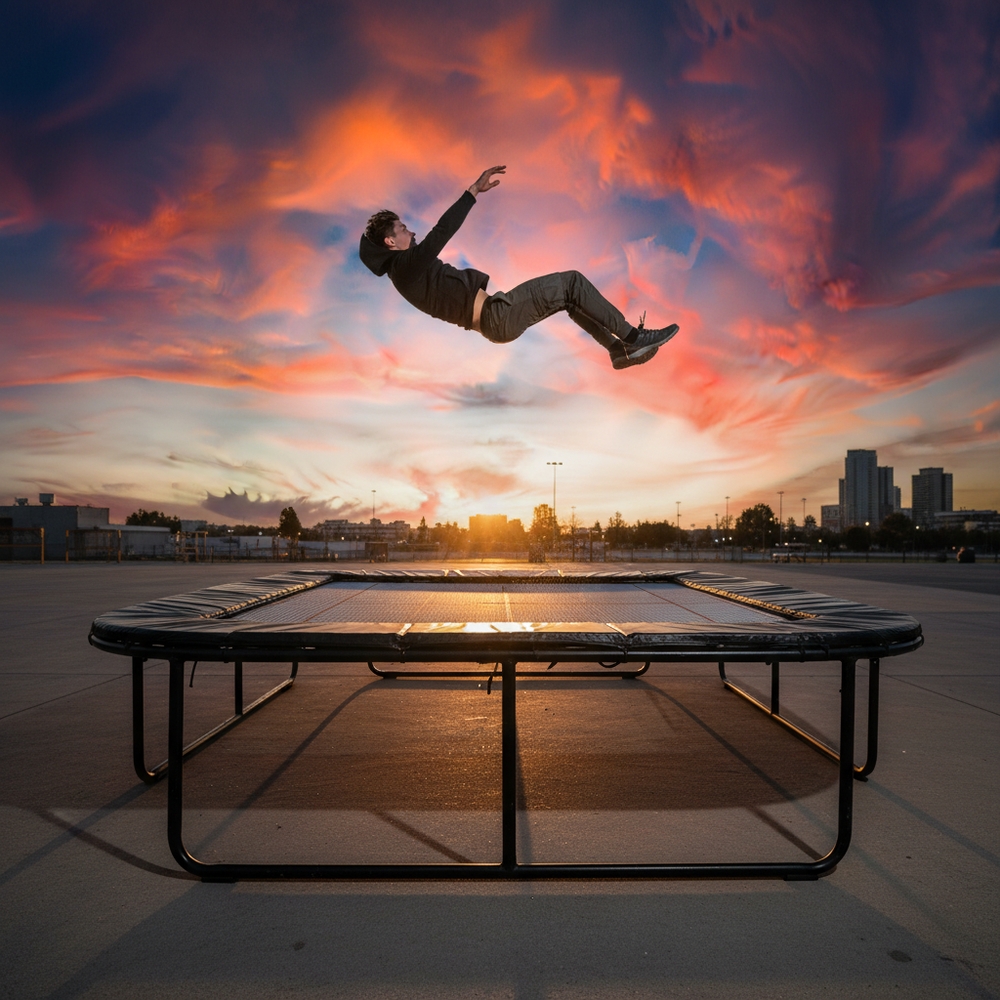
In recent years, the backyard trampoline has transformed from a simple children’s toy into a legitimate training ground for extreme athletes. For practitioners of parkour, freerunning, and aggressive gymnastics, the trampoline is the ultimate laboratory. It provides the massive airtime needed to learn complex flips, twists, and off-axis spins in a relatively safe, forgiving environment before taking those tricks to the hard concrete of the streets.
However, a standard, round, big-box store trampoline is practically useless for this level of athletics. They bottom out easily, the bounce is localized only to the center, and the frames simply cannot handle the extreme dynamic loads generated by adult athletes.
If you want to train parkour safely and effectively, you need a High-Performance Rectangular Trampoline. In this guide, I will break down exactly what features make a trampoline “parkour-ready” and review the absolute best models available on Amazon for extreme trick training.
1. Why Shape Matters: The Rectangular Advantage
For parkour, you need space to move horizontally, not just vertically.
- The Round Problem: Round trampolines are designed to push the jumper back to the exact center of the mat. If you try to do a running front-flip combination across a round trampoline, you are fighting the tension of the springs the entire way.
- The Rectangular Solution: Rectangular trampolines feature springs that work independently. This means you get the same massive, upward rebound whether you are jumping in the dead center or two feet from the edge. It allows athletes to perform long, multi-trick “passes” from one end of the mat to the other.
2. Key Specs for Extreme Training
When evaluating a trampoline for parkour, ignore the marketing fluff and look strictly at the hardware.
- Spring Length: You need a minimum of 8.5-inch springs. Elite trampolines use 10-inch springs. Longer springs store more kinetic energy, resulting in a higher, more explosive rebound.
- Frame Thickness: Look for commercial-grade galvanized steel, at least 2.0mm thick. A parkour athlete landing a double-backflip generates immense force. A cheap frame will bend or buckle.
- Mat Porosity: The jumping mat needs high airflow. If the mat is too tightly woven, air resistance will slow down the bounce. “High-flow” mats allow you to punch through the air faster.
3. Top Parkour Trampolines on Amazon
Here are the heavy-hitters of the extreme bounce world, trusted by professional freerunners.
1. The Pro Standard: ACON Air 16 Sport HD
Ask any professional parkour athlete what they have in their backyard, and the answer is almost always ACON.
- Why it wins: ACON is built specifically for tricking. Their proprietary “Synergy Design” marries an incredibly heavy frame with 10-inch piano-wire springs. The bounce is aggressive, deep, and perfectly uniform across the entire 16-foot rectangle.
- The Parkour Edge: There is no official single-user weight limit. It can handle any dynamic load an athlete throws at it.
- Get it on Amazon: ACON Air 16 Sport HD Rectangular Trampoline
2. The Mid-Tier Performer: Skywalker 15ft Rectangular
If you are an aspiring freerunner on a budget, Skywalker offers the best entry point into rectangular performance.
- Why it wins: It provides the crucial independent spring action of a rectangle at a fraction of the cost of an ACON. The patented “no-gap” enclosure system is excellent for preventing feet from sliding into the springs during off-axis landings.
- The Parkour Edge: Excellent for learning the mechanics of twists and flips before upgrading to a pro-tier bounce.
- Get it on Amazon: Skywalker 15ft Rectangular Trampoline
3. The “Bounce Board” Accessory
To truly train for street parkour, you need to practice how flips feel with a board strapped to your feet (for snowboarders/skaters) or simply to increase core control.
- The Upgrade: A foam trampoline bounce board allows you to practice grabs and spins safely without tearing the mat.
- Affiliate Pick: VODA Trampoline Bounce Board
4. Safety First: The Training Environment
Extreme tricks require extreme safety precautions.
- Pad Everything: Ensure your safety pads are thick and securely tied down. Many athletes add secondary padding over the frame just in case.
- The Fall Zone: Never place a performance trampoline near fences or concrete. You must have a clear, soft grass perimeter of at least 6 feet around the entire structure.
- Know Your Limits: A high-performance trampoline will launch you significantly higher than you are used to. Master the basics of spatial awareness before attempting advanced flips.
Conclusion
If you are serious about parkour, freerunning, or aggressive gymnastics, your equipment dictates your progression. Upgrading to a professional-grade rectangular trampoline like the ACON Air 16 changes the game entirely. It provides the explosive airtime, consistent edge-to-edge bounce, and structural safety required to master extreme tricks. Invest in the right training ground, and unlock your true athletic potential.